

Keen followers of our content may have seen Justin’s attempts to predict the future, when he wrote his vision for 2025 back when he launched Practice Made Purrfect, which we shared during our birthday celebrations back in October.
The accuracy of his predictions were… a mixed bag. We encourage you to give them a read at the bottom of this blog post.
But as we get ready to welcome the new year, we thought it would be fun to allow Justin to try again. And this time, we thought we’d line up some competition!
And what a line-up it is: Dr David Hodges, Tracey Morley-Jewkes, Dr Francesca Verney and all of human knowledge distilled into everyone’s favourite AI tool – ChatGTP!
Read on to see what the veterinary industry could look like in 2030 – and we’ll see you in five years to judge who’s the winner!

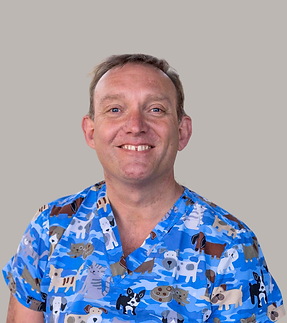


Justin Phillips
Founder of Practice Made Purrfect

Seeing as I was so good at this five years ago, let’s go again!
(Yes, that is irony. I was rubbish. Read the blog to see for yourself.)
Prediction number one
During the last five years we've witnessed an unprecedented number of new start ups, with former practice owners and highly motivated senior vets and nurses rushing in to fill the void created by a decade of consolidation.
Fast forward to 2030 and we'll see a number of these successful new phoenix start ups will have expanded or merged with one another to become large multi-site, well run, thriving regional groups.
Some of these will then choose to exit to a Large Veterinary Group (LVG).
It's a reminder that everything is cyclical.
Prediction number two
AI is very much the buzz word of the moment but the tangible outputs are still being shaken out.
Just like the dot com boom at the tailend of the last millennia – how weird does that feel to read aloud – promised we'd be surfing the mobile internet on our phones, when the reality was a few black and white pixels that took an age to download.
This reality did eventually materialise but it took a decade longer than the hype that took the world by storm.
And the same will most probably be true for AI as the systems and us as users take time to adapt.
The proliferation of AI video content will erode trust with us all asking how we can believe anything if we haven't seen it with our own eyes.
This makes authenticity more important than ever.
But by 2030 we'll have functioning AI baked into our systems.

David Hodges
Founder of Stellar Vets
-
Online consultations will become an important part of a practice's business model. However, I disagree that consult rooms will become dual purpose for online consulting.This makes little sense to me, in fact it defeats the object. Online consults can be done from anywhere which should allow practices to expand their reach without the need for further bricks and mortar expansion.
-
Nurse clinics will become a major revenue stream for practices. This could be helped by RCVS allowing nurses some diagnosing and prescribing powers.
-
Wearables data will become incredibly useful for managing some conditions, such as diabetes and arthritis.
-
LVGs will continue to be the exit of choice for practice owners nearing retirement.
-
There will be further IPOs of veterinary businesses – initial public offerings on the stock exchange.

Tracey Morley-Jewkes
Veterinary business management consultant
“What will define veterinary success in 2030 isn’t what we treat, it’s how we lead.”
Leadership and team experience will mature across three critical dimensions – leading ourselves, our teams and our businesses, with a far stronger balance between performance and wellbeing.
Client experience will of course be more digital, but the winners won’t be those simply keeping up with technology. They’ll be the practices that combine digital ease with human connection, using telephony and consult-room skills to truly convert care, not just transact it.
Business leadership will step up too, with vet owned practices and all leaders great and small as fluent in values-led P&L stewardship as they are in clinical decision-making.
LVGs will need to become more agile and practice-centric; independents more connected and collaborative.
High penetration (+60%) preventative health plans will be the norm, while rising insurance costs will sharpen the focus on affordability and access to quality care.
And while today’s start-up boom is inspiring, by 2030 only the well-planned, well-sited and exceptionally well-led will have real choice - to grow, to sell, or to remain proudly independent in what may well become a buyer’s market.

Francesca Verney
Veterinary Director at Pet People Vets
-
People will continue to own, buy and re-buy pets, and they will be better cared for than ever, polarising veterinary work to preventative care and complex disease. This will be location dependent with some socio-economic areas avoiding this polarisation.
-
There will be a number of new LVGs who will seek to enter the market cycle at this time – why wouldn’t they?
-
There will be a massive oversupply of vets relative to jobs due to the opening of new vet schools and reduced exit of experienced vets from the profession.
-
Vets (for the most part!) will continue to care abundantly about the intellectual challenge of being in practice and will remain healthcare providers rather than service people.
-
Referral centres will weather a tough storm and as the global financial markets recover, they too will come to the fore again – maybe 2035! Editor’s note: we have long memories at PMP and we will file this away for future inspection.
-
Veterinary services will work against, alongside and together with AI to improve efficiencies, enable diagnoses and sometimes compete for work. I do think though that the end point is always a physical veterinary practice with hands on a pet in the room. Learning to work together quickly is fundamental.

Chat GPT
Prospective ruler of us all
We asked Chat GPT to have a crack at this for us and… well, to be honest we weren’t too impressed.
Lots of the robots’ vision for the future looked like what we expect from forward-thinking practices today.
Integrated digital workflows, relationships based on trust, positive cultures and tailored care – Chat GPT clearly wasn’t at London Vet Show this year because these are things that many of our leading lights have been prioritising for years already.
However, it did come up with three bullet points that gave us food for thought. Note, this is Chat GPTs wording from here on out, for authenticity rather than out of laziness.
Clinics designed around flow, not tradition
By 2030, practices may have:
-
Minimal or optional reception desks
-
“Drop-and-go” pods for medication collection
-
Consult rooms that double as telemedicine hubs
-
Zones designed for short stays, long stays, diagnostics and wellbeing
Buildings will be intentionally crafted spaces that make people feel calm, cared for and connected.
The wellness economy takes centre stage
Health plans evolve into true wellness ecosystems: nutrition, behaviour, preventive diagnostics, tele-support, home testing, weight-tracking devices, and personalised care recommendations.
Subscriptions extend beyond medical care into lifestyle and wellbeing, blending convenience with peace of mind.
Data-driven medicine and predictive diagnostics
Practices will increasingly rely on wearables, AI imaging, baseline biomarker tracking and early-warning alerts.
By 2030, catching problems before they become problems will be a core part of the veterinary value proposition.
In conclusion: Whilst we can't be certain where this ship is heading, we’re here to help figure things out as we go.
Vet practice marketing
To us it's personal
If you’re eager to improve your practice’s marketing but you’re unsure where to start, I’m taking on new clients for the next quarter! Book an initial discovery below!
